How Agentic Developer Workflows Are Becoming Production-Ready
The age of simple autocomplete in software development is coming to an end.
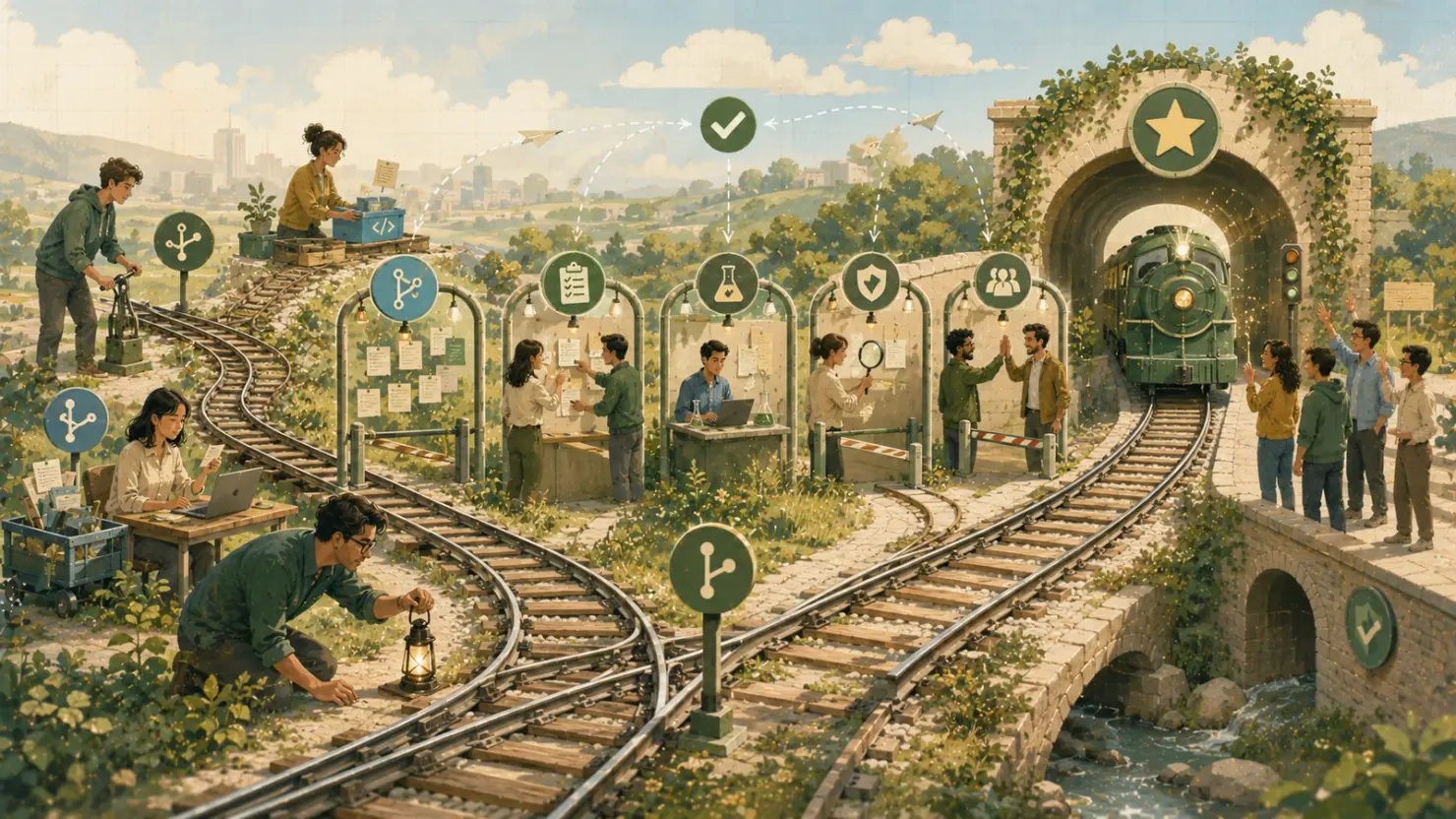
The era of simple autocomplete in software development is approaching its end. We are moving from assisting chatbots to autonomous agents that can complete complex tasks across a codebase. The promise is no longer just better snippets. It is the automation of larger development cycles, from investigation to implementation to pull request.
That shift is powerful, but it only becomes useful when teams add structure around it.
Update, 25 June 2026: This guide now adds the missing operating layer: project instructions, tool permissions, hooks, memory and review artifacts. The important question is no longer only which model writes better code. It is whether the surrounding workflow turns an agent into a reliable work unit.
Relevant tools on Utildesk
If you want to compare the trend through real tools and frameworks, these entries are a good starting point:
- Claude for long-context coding sessions and agentic workflows,
- GitHub Copilot for the productive assistant layer inside the editor,
- Cursor for an IDE that is built around AI-assisted work,
- Aider for Git-oriented coding sessions in the terminal,
- OpenAI Codex for repository-specific agent instructions and isolated task environments,
- LangChain for orchestration and agent framework concepts,
- CrewAI for collaborative multi-agent flows.
Tools that act inside the codebase
Modern agentic tools are different because they can interact with the development environment. They do not only answer questions. They can read a repository, edit files, run commands and iterate on the result.
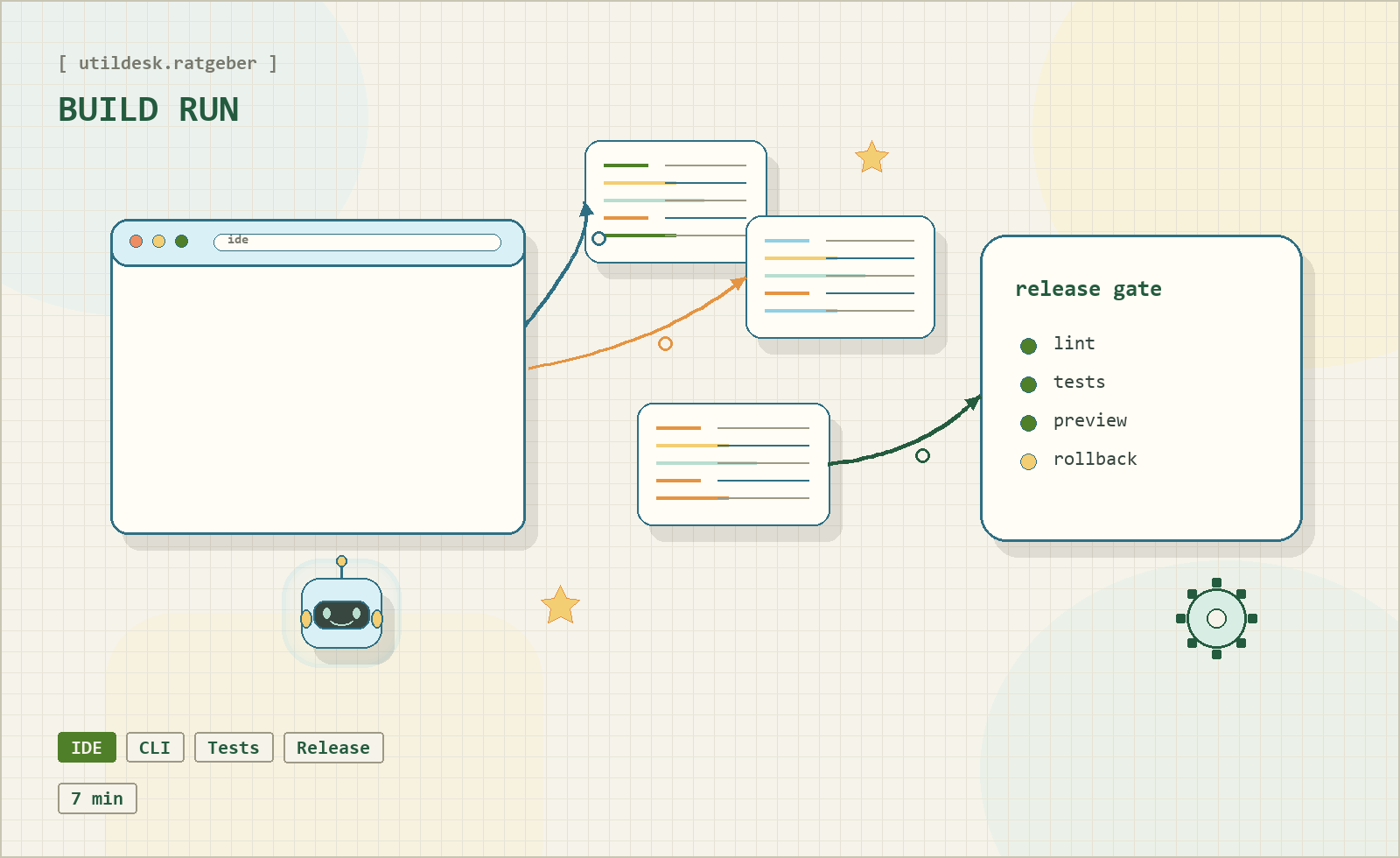
Agents can fix bugs, build features, generate tests and handle repetitive maintenance work. Multi-agent frameworks add another layer by assigning roles to specialized agents and coordinating them through explicit processes.
For teams, this changes the workload. People can spend more time on architecture and intent while agents handle implementation slices, lint fixes or documentation drafts. But the more autonomy you allow, the more important the control layer becomes.
From coding agent to work agent
The interesting shift is not only that agents write code. It is that the same operating pattern starts to move into knowledge work. A good coding agent understands a goal, uses tools, checks intermediate results, explains failures and leaves behind an artifact that can be reviewed. Product managers, operations teams and internal analysts need the same chain.
That transfer only works when the task is structured like a good engineering ticket. An agent can turn support cases into a bug brief, CRM notes into a prioritized list or research sources into a decision memo. But it should not "just help". It should work inside clear inputs, approved tools, write permissions and acceptance criteria.
This is why coding practices suddenly matter outside engineering: small work packages instead of giant prompts, visible intermediate state instead of black-box answers, review before writing into production systems, and a strict difference between suggestion, execution and approval.
Architecture and state
Long-running agentic tasks need durable state. If an agent is interrupted, the workflow should be able to resume without losing context. If a human needs to intervene, the current plan, assumptions and files touched must be visible.
This is why stateful orchestration matters. A production-ready agent workflow should know what it is doing, why it is doing it and how to recover when something fails. It should also support human-in-the-loop checkpoints: moments where a developer can inspect, approve, redirect or stop the run.
Context discipline: instructions are infrastructure
In production teams, context becomes infrastructure. Files such as AGENTS.md, CLAUDE.md or repository-specific rules are not prompt toys. They are a contract between the team and the agent: which commands are allowed, which tests matter, which architecture rules are non-negotiable, where sensitive data lives and when the human must be asked.
Hierarchy matters. Global rules should stay short. Project rules should describe setup, tests and code style. Local rules should cover repository-specific exceptions. The clearer those layers are, the less a human has to restate in every session. But memory can also rot: outdated assumptions, bloated rule files and conflicting guidance make agents less reliable, not smarter.
For companies, the practical rule is simple: version and review agent instructions like production configuration. If an agent is allowed to work in a repository, its operating manual belongs in the same review culture as CI, build scripts and security checks.
Verification before merge
The biggest risk is not that an agent produces invalid syntax. The bigger risk is plausible code that violates the real requirement. An agent can write tests that confirm its own misunderstanding. It can make a local change that breaks an integration somewhere else.
That is why verification becomes the safety anchor. Teams need a living specification, clear acceptance criteria and automated checks that prove the implementation against the intended behavior. Human review remains essential, but it should not be the first and only line of defense.
Text instructions are not enough. Hard hooks, permissioned tool lists and CI gates must be able to block risky actions before an agent performs them. A useful pre-tool check can prevent an agent from reading production secrets, calling external APIs or committing directly to a main branch without approval. This is not bureaucracy. It is the line between a useful work agent and a confident risk machine.
What production-ready means
Production-ready agentic development is not "let the robot do everything". It is a controlled workflow where agents can act, but every action is bounded by context, tests, review and rollback options.
The strongest systems will not simply generate more code. They will make the work observable: which files changed, which assumptions were made, which checks passed, and where a human approved the next step.
Bottom line
Agentic developer workflows are becoming real because the surrounding infrastructure is maturing. The winners will be teams that treat agents like operational collaborators: useful, fast and powerful, but always connected to specifications, state and verification.
The practical starting point is small: one repository, one agent, one task type and one review log for a week. Do not only record whether code was produced. Record where the agent asked good questions, where it assumed too much, which tests were missing and which instructions had to be tightened. That log becomes the team's real agent capability.