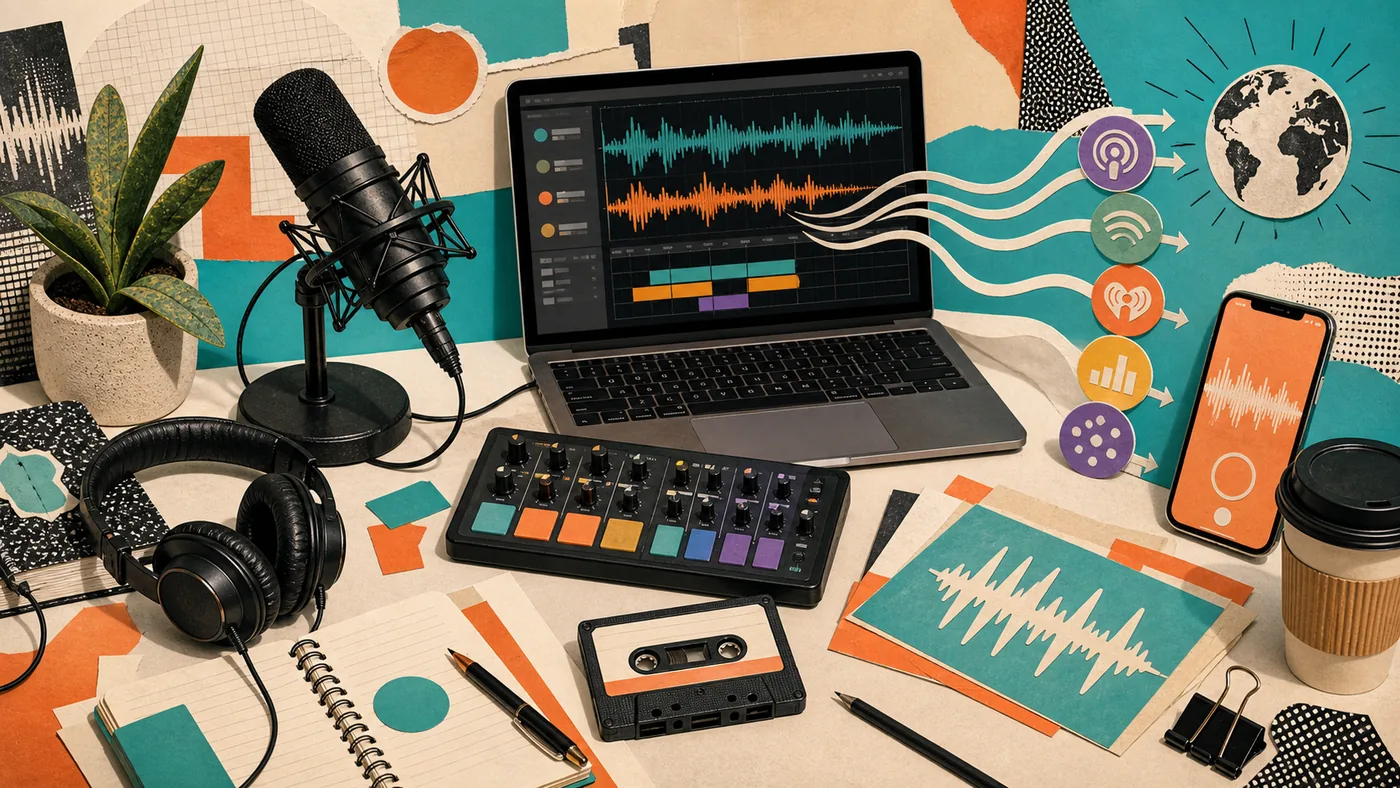
Anchor, now known in the Spotify for Podcasters environment, has greatly simplified podcast distribution for many creators. The core idea remains attractive: recording, hosting, distribution, and simple analytics should be possible without technical infrastructure.
For podcasts, though, the tool is only part of the work. What matters are the format, rhythm, audio quality, topic focus, and whether episodes remain easy to find and build on after publication.
Who is Anchor suitable for?
Anchor is suitable for individuals, small teams, clubs, educational projects, and brands that want to start a podcast without much technical operations overhead. Anyone who needs complex monetization, private feeds, very detailed analytics, or full hosting control should compare alternatives.
Typical use cases
- Quickly publish a new podcast and distribute it across platforms.
- Host interviews, learning formats, or community updates on a regular basis.
- Manage simple episode descriptions, cover art, and metadata.
- Track podcast performance through basic metrics.
- Test a format before investing in professional production.
What really matters in day-to-day work
In day-to-day use, Anchor helps most at the start. The most important work remains editorial: a clear promise for each show, good episode titles, and editing that saves listeners time instead of testing their patience.
Anyone who wants to grow long term should clarify ownership questions early: RSS feed, export, brand assets, episode archive, and the ability to switch hosts later.
Key features
- Podcast hosting and distribution through a simple workflow.
- Management of episodes, descriptions, cover art, and feed data.
- Basic analytics for reach and usage.
- Tools for recording or uploading existing audio files.
- Depending on region and program, options around monetization or Spotify integration.
Pros and limitations
Benefits
- Very low technical barrier to entry.
- Good for creators who want to test a recurring format quickly.
- Integration with Spotify can simplify reach and management.
Limits
- Less control than specialized podcast hosts.
- Advanced analytics and monetization may be limited.
- Platform dependency should be considered for long-term formats.
Workflow fit
Anchor fits a lean podcast process: plan the topic, record, edit, write metadata, publish, then note lessons for the next episode. An editorial calendar outside the tool still makes sense.
For new formats, it is better to test with five episodes than to make a big promise for an entire year. That makes it easier to see whether topic, rhythm, production, and audience really fit together.
Privacy & data
For podcasts, data is not limited to audio files; it also includes guests' personal data and usage data. Consent for interviews, rights to music, and clear archiving matter more than many beginners assume.
Pricing & costs
Costs and available programs can vary depending on the platform status and region. Before starting, check whether the desired hosting, RSS, and monetization model fits the planned podcast. The pricing model recorded in the dataset is: Freemium.
Editorial assessment
Anchor is a good starting point for podcasting without technical baggage. Anyone who wants to turn it into a lasting media asset should think early about feed control, rights, and format strategy.
A good first test for Anchor is therefore not a demo click, but a real mini workflow: quickly publish a new podcast and distribute it across platforms. If that works with real data, real roles, and a clear result, the next expansion stage is worthwhile.
At the same time, the main limitation should be stated openly: less control than with specialized podcast hosts. That friction is not a knockout criterion, but it belongs before the decision, not in the frustrated post-purchase debrief.
Open frequently asked questions
FAQ
Is Anchor suitable for small teams?
What should a Anchor pilot look like?
Start with a bounded process, a small group and a clear success criterion. Check output quality, permissions and handovers before expanding the scope.
Which data should not be processed in Anchor without review?
Sensitive or confidential content should wait until contract terms, access, storage and deletion controls have been reviewed. Escalate uncertainty to the responsible privacy owner.
When is an alternative to Anchor the better choice?
Choose an alternative when the need is occasional, a required integration is missing, or administration and cost outweigh the practical benefit.
Yes, if the intended use stays small enough and the team realistically plans for maintenance.
What should you pay attention to before using Anchor? Less control than with specialized podcast hosts. It should also be clear in advance who maintains the tool, which data is used, and how success will be measured.
Does Anchor replace human work? No. Anchor can speed up or structure work, but decisions, quality control, and responsibility remain with the team.