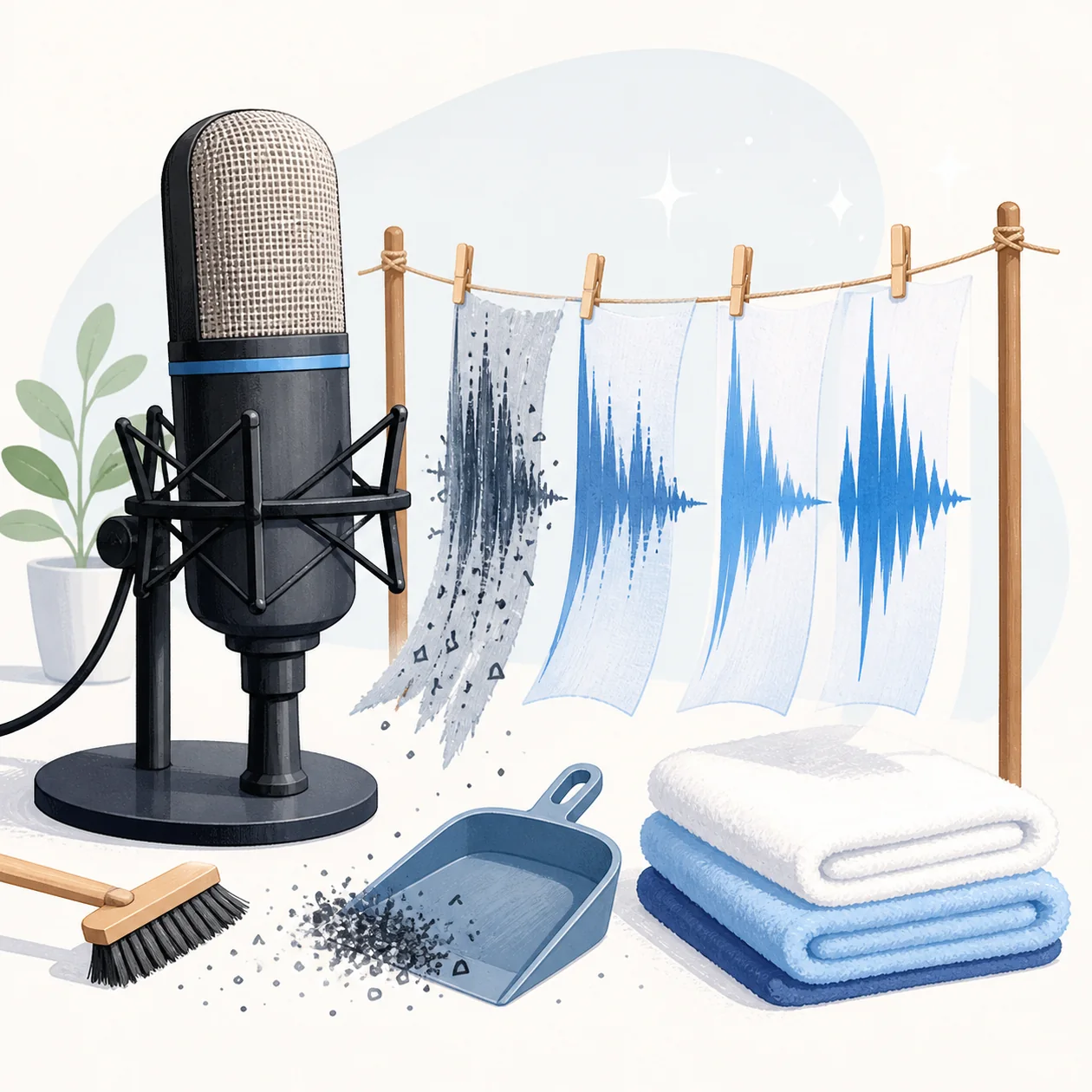
Cleanvoice AI is a cloud-based tool for automating the post-production of podcasts, interviews, and other spoken recordings. After an upload, it can analyse audio or video and remove filler words, long silences, mouth and breath sounds, stutters, and background noise. The important boundary is that the output is a fast first edit, not a reliable final approval. Every voice track still needs a human listening pass before publication.
Who is Cleanvoice AI for?
Cleanvoice AI fits podcasters, small editorial teams, agencies, journalists, and organisations producing recurring interviews or training videos. It is most useful when the same manual work repeats every week: finding every "um", awkward silence, breath, or small distraction in a timeline before the actual editorial work can begin.
It is less suitable for music production, detailed sound design, or recordings where an engineer must control every nuance. It is also not a rescue button for clipped, extremely quiet, or heavily overlapped recordings. First confirm that the source contains enough usable speech to edit.
What does it actually edit?
Cleanvoice's official templates cover noise removal and loudness normalisation, Studio Sound, filler words, long silences, mouth sounds, breaths, and stutters. Spoken-content workflows can also add transcription, summaries, show notes, and social-content suggestions. With multitrack files, Cleanvoice can synchronise tracks after editing and merge them when needed.
The selected template matters. If the only goal is to reduce traffic noise, create a custom template with only noise removal enabled. A broad clean-audio preset may also change pauses, filler words, or other elements that the editor deliberately wants to keep.
A practical production workflow
For a weekly podcast, keep the process simple: preserve the raw file, choose a template, export the edited version, and listen to a copy with headphones. On an interview, pay special attention to joins after filler removal, names and technical terms, pauses before answers, and changes in tone between speakers.
Run a pilot on three real examples: a clean recording, a typical remote recording, and a difficult edge case. Compare more than saved editing minutes. Track corrections, missing words, unnatural cuts, and time to final approval. That shows whether Cleanvoice AI removes work or merely creates another review station.
Quality controls and limitations
Automatic removal is not neutral. Aggressive silence or breath removal can make a conversation sound synthetic. Noise reduction can create artefacts when the recording contains music, reverb, or several overlapping voices. Accents, specialist vocabulary, code-switching, and poor room acoustics are good reasons to compare the transcript and every cut with the original.
For important productions, keep an A/B comparison between the original, the Cleanvoice export, and the manually corrected version. Preserve the original file and record the chosen template so the team can roll back. Without that trail, a small automatic edit can become difficult to explain later.
Integrations and operations
Cleanvoice can be used through browser uploads, a file URL, or a live recording. Its offering also includes API access and integrations, with the exact scope depending on the current plan and product surface. For a recurring pipeline, assign an owner for templates and define which export enters the next production step. With multitrack projects, verify that synchronisation, mixing, and export arrive cleanly in the target editor.
Production use needs named originals, a file-naming rule, an approval step, and an error path. API access does not make a workflow automatically auditable: upload failures, poor detection, and incomplete exports must be visible before an episode is marked as ready.
Privacy and cost
Processing happens in the cloud. Cleanvoice's official pricing page says that original and edited files are stored for seven days and then permanently removed. That is not a blanket approval for confidential material. Before uploading interviews, customer calls, or internal training, check consent, processing terms, retention, deletion, and recording rights against your own privacy process.
Costs depend on processed audio or video duration. The official offer includes a free entry point, pay-as-you-go credits, and subscriptions, as well as API and custom options. Credits are charged by file duration and rounded up to full minutes. Budget for failed attempts, variants, multitrack exports, and the human listening time that remains after automation.
Editorial Assessment
Cleanvoice AI belongs on the shortlist for teams that regularly clean spoken recordings and do not want to hunt every correction by hand. Its value is clearest for repeatable formats with a defined template and fast human approval. Occasional users who need one repair, or engineers who need complete mix control, may be better served by a manual editor.
Our recommendation is a small pilot with real recordings and an explicit acceptance rule: less editing time, no lost content, and a natural voice. If listening takes nearly as long as manual editing, or if important speech is changed, Cleanvoice AI is not the right shortcut for that workflow.
Open frequently asked questions
FAQ
Can Cleanvoice AI finish a podcast from start to publish?
No. It can speed up recurring cleanup, but editing decisions, transcript review, levels, content, music rights, and final listening remain editorial responsibilities.
Can I remove only background noise?
Yes. Use a custom template with only noise removal enabled. A broader preset may also edit filler words, pauses, or mouth sounds.
How long are my files stored?
Cleanvoice says on its official pricing page that original and edited files are stored for seven days. Confidential recordings still need a privacy and deletion review before upload.
How are credits calculated?
Billing follows the duration of the uploaded file. Cleanvoice rounds up to full minutes, so a file lasting ten minutes and twenty seconds uses eleven minutes of credit.
Will it perform equally well on every voice?
No. Accent, room echo, crosstalk, music, and poor microphone levels affect detection. A test with your own recordings and a listening pass is more useful than a polished demo.