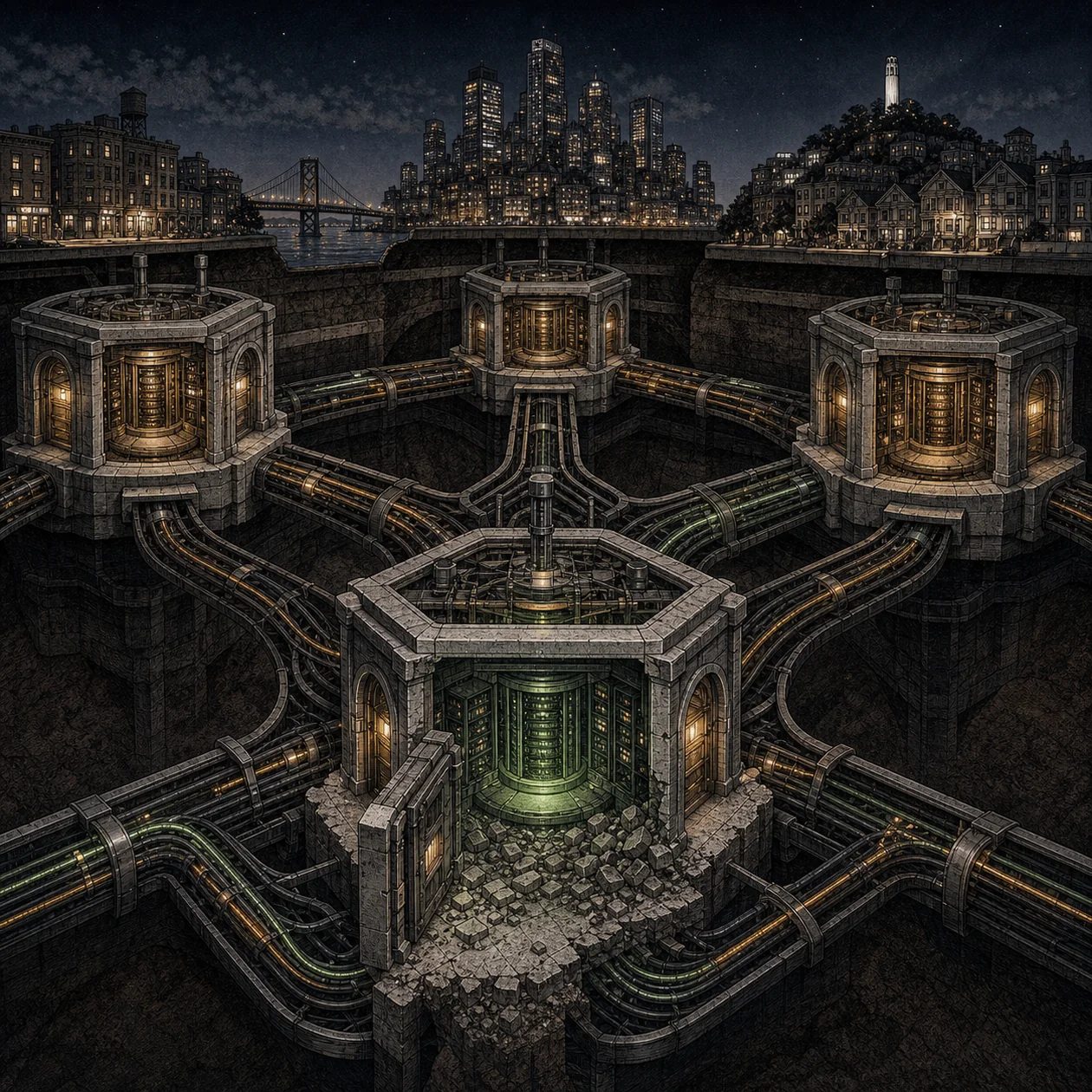
CockroachDB is a distributed SQL database for applications that need relational transactions while replicating data across nodes or regions. That is an architectural choice, not an automatic high-availability upgrade for every PostgreSQL application: replication layout, latency, transaction retries, backups, and cost must fit the workload.
What CockroachDB is for
CockroachDB is aimed at product and platform teams operating transactional services across failure domains or geographic regions without giving up SQL and strong consistency. SaaS products with distributed users, global control-plane data, and explicit RTO/RPO requirements are plausible candidates. A small application serving one region will often be easier to run on PostgreSQL.
The components that matter
The cluster splits data into ranges and replicates them. Its Raft-based consensus model confirms writes after a quorum of replicas agrees. The SQL layer provides ACID transactions; SERIALIZABLE is the default isolation level and READ COMMITTED is also available. The application, driver, SQL API, Cloud Console or CLI, monitoring, and backup storage therefore form one operational service. CockroachDB does not replace connection pooling, schema migration discipline, observability, or a tested disaster-recovery plan.
A practical rollout workflow
- Describe a representative workload using realistic data volume, write patterns, and regional latency.
- Define tables, primary keys, indexes, and regional or zone rules; not every table needs global placement.
- Build a Cloud cluster or self-hosted test environment and exercise migrations, connection pooling, and driver error handling.
- Test transactions under contention. With
SERIALIZABLE, the application must handle possible retry errors; a happy-path test is not enough. - Only then standardize backups, restore into an isolated environment, alerting, roles, and the upgrade process.
Operations, integrations, and recovery
CockroachDB Cloud removes part of the cluster-management burden. A self-hosted team additionally owns provisioning, nodes, upgrades, certificates, monitoring, and support paths. Self-hosted backup and restore can use AWS S3, Google Cloud Storage, or Azure Storage for full and incremental backups. The official documentation does not treat arbitrary S3-compatible services as officially supported. A backup becomes useful evidence only after a restore has been rehearsed with the right regions, permissions, and application migrations.
Release planning is part of operations. Cockroach Labs publishes major versions quarterly, with different support windows for Regular and Innovation releases. Before upgrading, check the supported version, client drivers, migrations, and maintenance window; an Innovation release is not automatically the conservative production choice.
Evaluation and boundaries
Do not evaluate CockroachDB only with a peak-throughput benchmark. Under the same schema, measure p95/p99 latency, write throughput, retry rate, hot ranges, rebuild and restore time, and cost for the intended topology. Also verify that the team understands regional placement and that the application handles transient failures.
The distributed architecture is not a free benefit. Many small writes to the same key, unnecessarily global tables, or distant write regions can create contention and latency. A single-region cluster with expensive geographic redundancy can then be harder and more expensive than a conventional relational database.
Security, privacy, and governance
Client and node traffic is protected with TLS. Depending on the deployment, data at rest can use provider-managed keys, self-hosted Encryption at Rest, or customer-managed encryption keys (CMEK) in CockroachDB Advanced. Roles, authentication, network allowlists, separate service identities, and least privilege belong in the rollout plan. CMEK is not a magic deletion switch: losing key access can make a cluster unavailable.
Before production data enters the system, document region, processing agreements, retention, export, deletion, log contents, and key ownership. Backups need their own encryption and access controls; local Encryption at Rest does not automatically encrypt every exported backup file. The current license and support position should be checked before self-hosting because the former Core offering was retired.
Costs and decision criteria
CockroachDB Cloud has a free Basic entry point, but “free” does not mean every production requirement is free. The bill depends on request units or provisioned vCPUs, storage, regions, networking, and the selected security and support tier. The current pricing page separates Basic, Standard, and Advanced; Standard and Advanced list different starting vCPU rates, while actual configuration and usage determine the total. Self-hosting moves the cost into infrastructure, on-call coverage, upgrades, backups, and specialist knowledge.
Editorial Assessment
We recommend CockroachDB to platform teams with a concrete need for distributed transactional applications and the willingness to rehearse data placement, retry logic, and restores. Its value is clearest when global availability or deliberate failure-domain separation matters more than the simplest possible database operation.
For a regional CRUD application, a small team without database on-call coverage, or a system deeply invested in PostgreSQL tooling, PostgreSQL is often the better choice. Decide with the real schema, a measured workload, and a credible recovery and cost assumption—not with a feature checklist.
Open frequently asked questions
FAQ
When is CockroachDB justified over PostgreSQL?
When multiple regions, automated replication, and transactional consistency solve a real product or resilience requirement. For one region with a straightforward failure plan, PostgreSQL usually brings less architectural and operational overhead.
Does every application need to implement transaction retries?
Applications must be prepared for retry errors, especially with SERIALIZABLE transactions and concurrent writes. Test the chosen driver and transaction pattern under load early; the database cannot safely infer every application-level retry loop.
Is CockroachDB fully open source?
That shorthand is misleading for the current product. Cockroach Labs retired the former Core offering in late 2024 and consolidated newer binaries under the CockroachDB Software License. Review the license and use restrictions before self-hosting or embedding it.
Are Cloud backups automatically enough for disaster recovery?
No. Backups need protection from accidental deletion, restricted access, and regular restore tests in an appropriate target environment. Check regions, secrets, schema version, and whether the application can start correctly after the restore.
Which Cloud tier should a team choose?
It depends on workload and requirements for scaling, private connectivity, support, compliance, and key control. Start with a measured load profile and compare Basic, Standard, and Advanced on the current pricing page; a universal plan recommendation would be guesswork.
