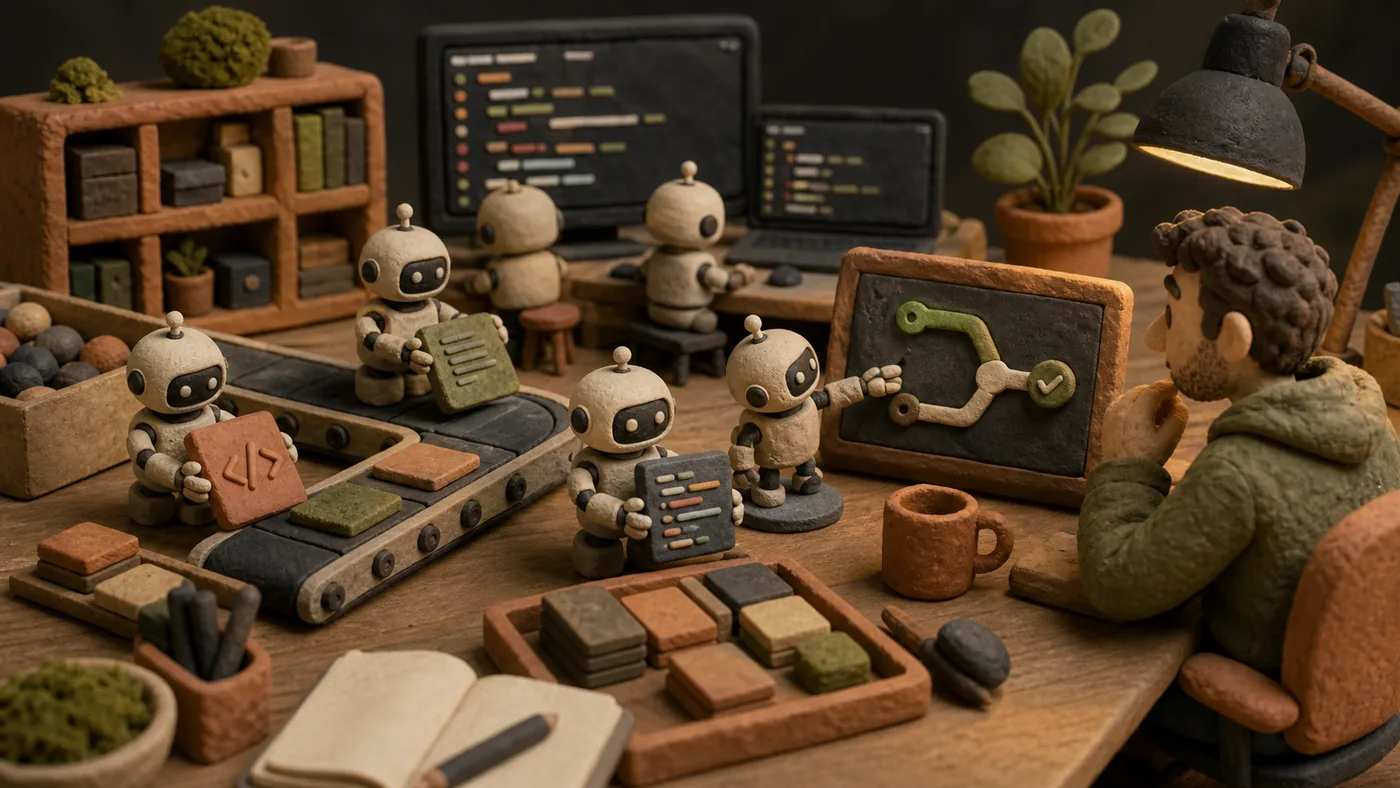
OpenHands aims to work on software tasks inside a development environment rather than just comment on them. That places it closer to agentic engineering than classic autocomplete.
OpenHands is interesting for engineering teams that want to test agent runs with control and without being fully locked into closed tools.
Editorial update June 2026
OpenHands is especially relevant in 2026 because many teams want agentic coding as a controllable open-source workflow, not only as a SaaS product. The appeal is transparency: environment, permissions, logs, and model choice can be shaped more deliberately than in a pure black box.
That does not remove the operational work. Teams using OpenHands need clear repository rules, secret protection, isolated branches, tests, and an understanding of which tasks an agent may handle. OpenHands is strongest where control matters more than a perfectly polished demo.
Editorial update July 2026
OpenHands remains most valuable as a controllable laboratory for agentic engineering. The practical progress is not that an agent completes every task autonomously, but that a team can define the workspace, model access, logs, and merge gate itself. Test the current CLI and SDK workflow against your own sandbox, CI, and permission model before adopting it more broadly.
A useful pilot starts with one small, reproducible issue, produces a reviewable diff, and measures more than time saved: include retries, rework, failed runs, and review effort. That turns a demo into a fair decision about OpenHands' place in the engineering process.
Who is OpenHands for?
OpenHands is most useful for teams and individuals that treat a AI coding agent as part of a real workflow, not as a novelty. Before adopting it, define the task it should accelerate and where human review still remains necessary.
Typical use cases
- Break repository tasks into smaller agent runs
- Prepare bug fixes, refactors, or tests
- Evaluate open-source agent architecture
- Try coding agents with clear guardrails
Strengths
- Closer to real repository work than pure chat tools
- Good for experiments with agentic coding
- Open approach helps understanding and control
Limits
- Agents need narrow tasks and review
- Not every run is reproducible or production-ready
- Setup and operations are more technical than simple assistants
Workflow fit
OpenHands makes sense when it has a clear place in the process: intake, production, review, or publishing. Without that role, even a strong tool becomes just another open tab.
Privacy & data
Coding agents can see code, tickets, logs, and sometimes secrets. Sandbox, permissions, and review paths must be defined before use.
Pricing & costs
In the catalog, OpenHands is marked with the pricing model Plan-based. For a real decision, check the current provider pricing, limits, team features, and export options directly.
Provider: https://openhands.dev/
Editorial assessment
OpenHands is a good lab for serious agent work. It becomes productive only with clear tasks, tests, and a human merge gate.
Open frequently asked questions
FAQ
Is OpenHands beginner-friendly?
It depends on the use case. Simple trials are usually manageable, but production workflows need ownership and quality control.
When is OpenHands worth it?
When the recurring value is greater than setup, cost, and review effort. For one-off tasks, a lighter tool is often faster.
What should be checked before adoption?
Data access, export options, team permissions, pricing model, and whether outputs need review before publishing.
What should a first OpenHands pilot look like?
Start with one small, reproducible issue in an isolated repository. Define the success criterion, allowed tools, test command, and merge owner first; then judge the reviewed diff, not only the agent's speed.
Is OpenHands automatically cheaper than a SaaS agent?
Not necessarily. Model usage, infrastructure, sandboxing, maintenance, and human review all belong in the calculation. The open approach pays off when control and adaptability have concrete value.
Editorial cluster update June 2026
OpenHands represents open software agents in the coding-agent cluster: agents intended to work on development tasks in a controlled environment.
The useful comparison is not whether OpenHands can produce a striking demo, but whether setup, sandbox, task definition, tests and review work for the team.
When OpenHands fits well
OpenHands is most useful when the workflow is already named and the team is not only looking for a tool name. For the Utildesk guide clusters, the practical questions are: which task is being prepared, which data is processed, who reviews the result and which alternative is more realistic in the same work context?
Limits and review points
OpenHands should not receive an uncontrolled production environment. Good pilots use isolated repos, small issues, clear logs and human merge decisions.
Internal comparison points
Useful comparison points in the Utildesk catalogue are OpenClaw, OpenAI Codex, Cline, GitHub Copilot. These links keep OpenHands connected to its real cluster of alternatives, risks and workflow roles instead of treating it as a standalone listing.