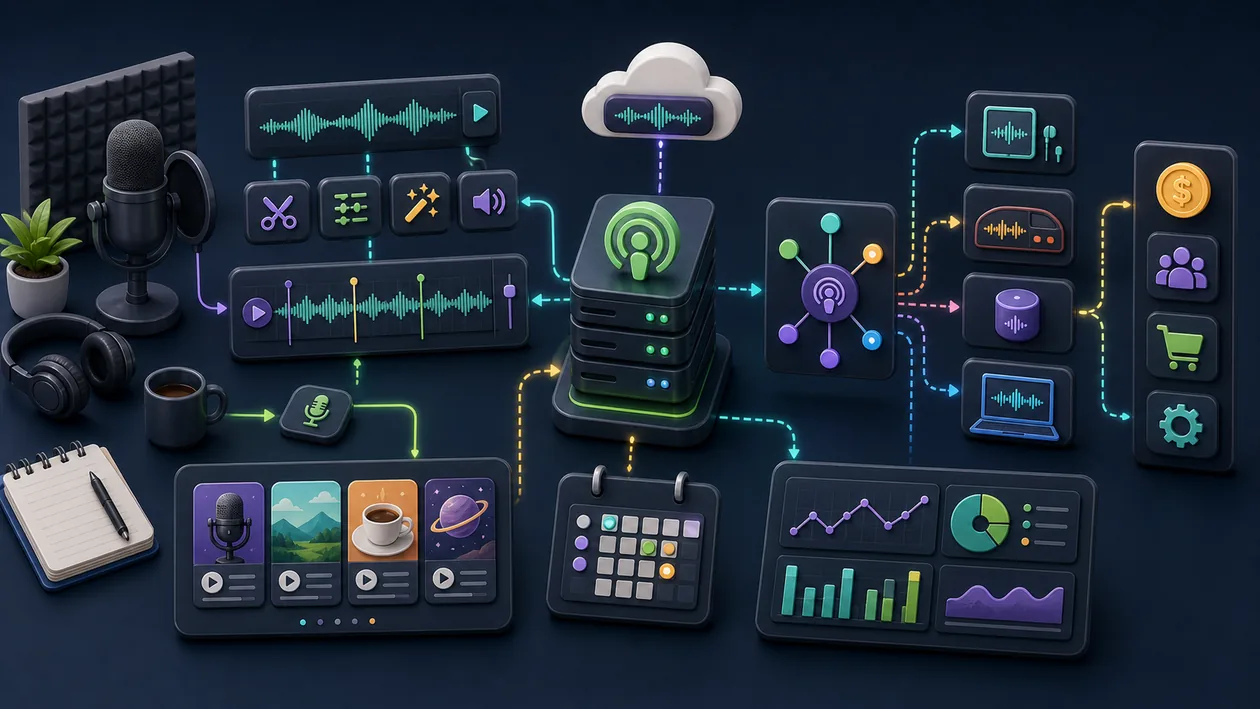
Podbean is a comprehensive podcast platform that offers both hosting and monetization options. With a user-friendly interface and versatile features, Podbean helps podcasters create, publish, and make their content accessible to a broad audience. The platform is especially well suited for beginners and experienced podcasters who value ease of use and professional tools.
Who is Podbean suitable for?
Podbean is aimed at individuals, businesses, and professional podcasters looking for a reliable solution for hosting and distributing podcasts. Thanks to its flexible features, the platform is suitable both for beginners who want to get started easily and for experienced users who need advanced analytics and monetization options. Podbean is also a good choice for educational institutions and content creators who want to publish audio content regularly.
Podbean is most useful for audio, podcast, video, and learning teams that do not want to improvise sound quality. The value should be judged in a real process where audio quality, intelligibility, production speed, post-processing, and consistent exports become not only faster but also easier to explain.
The first step with Podbean should not be a showroom test. A real work item shows much faster whether ownership, review, and output quality actually fit together.
Editorial Assessment
Podbean should be measured by process quality. A good implementation makes handoffs clearer, decisions easier to trace, and errors visible earlier.
A good test case for Podbean is a real recording with source material, editing, export, listening check, and acceptance. If intelligibility, production time, post-processing effort, loudness, and consistency do not improve in a plausible way afterwards, the value is not proven yet.
- Checkpoint for Podbean: Before rollout, intelligibility, production time, post-processing effort, loudness, and consistency should be supported by a small before-and-after comparison.
- Good start for Podbean: The team should define in advance what counts as improvement and which open issues would block rollout.
- Risk with Podbean: Even a good interface helps only partly when source material, rights, target platforms, loudness goals, and quality standards are not defined.
Key Features
Podcast Hosting: Storage space and bandwidth for publishing audio content.
Publishing and Distribution: Automatic distribution of the podcast to platforms such as Apple Podcasts, Spotify, Google Podcasts, and more.
Podcast Website: Built-in web portal for showcasing the podcast with a player and episode overview.
Monetization: Support for ads, subscriptions, and donations to generate revenue.
Analytics: Detailed statistics on listeners, downloads, and engagement.
Mobile Apps: Dedicated apps for iOS and Android to expand reach.
Live Streaming: Option to broadcast live podcasts and interact with listeners.
AI Tool Integration: Features for automatic transcription and audio enhancement (depending on the plan).
Community Features: Interactive options for listeners, such as comments and ratings.
Support and Tutorials: Extensive help materials and customer service.
Practical run with Podbean: The tool should be tested against a real recording with source material, editing, export, listening check, and acceptance, so strengths and limits become visible outside a polished demo.
Quality control in Podbean: The team needs a simple way to review intelligibility, production time, post-processing effort, loudness, and consistency after use.
Handoff with Podbean: Results, open questions, and decisions should be documented so other roles can continue the work later.
Pros and Cons
Pros
Easy to use, even for beginners.
Extensive monetization options.
Wide distribution across all major podcast platforms.
Professional analytics tools.
Mobile apps to grow your audience.
Flexible pricing and feature model depending on your needs.
Podbean can make the workflow calmer when tasks, review, and handoff are named before the rollout.
Podbean can improve handoffs when audio quality, intelligibility, production speed, post-processing, and consistent exports currently leave too much context in individual heads.
Cons
Some advanced features are only available in higher subscription tiers.
The user interface may feel somewhat limited for very experienced users.
Live streaming is not included in all plans.
Automatic transcriptions are limited depending on the plan and language.
Podbean can merely move the friction elsewhere when source material, rights, target platforms, loudness goals, and quality standards are not defined.
Podbean is not a self-running fix; without an owner and review, the team quickly loses sight of quality and limits.
Pricing & Costs
Podbean offers a subscription-based pricing model with different plan tiers based on storage, bandwidth, and features. Among other options, there is a free basic version with limited features that is well suited for getting started. Paid plans are available for professional podcasters and businesses and include advanced features such as unlimited hosting, detailed statistics, and monetization options. Exact prices and included services vary depending on the plan selected.
For Podbean, it is worth looking behind the sticker price: export limits, usage rights, storage, plug-ins, team features, and companion software. These factors often decide ROI more than the entry price.
Open frequently asked questions
FAQ
1. Is Podbean free to use? Yes, Podbean offers a free basic version with limited storage and features, ideal for beginners.
2. What monetization options are available? Podbean supports ads, subscriptions, and donations to generate revenue directly through the platform.
3. Can I publish my podcast on all major platforms? Yes, Podbean automatically distributes podcasts to platforms such as Apple Podcasts, Spotify, Google Podcasts, and more.
4. Is there a way to broadcast live podcasts? Live streaming is a feature available depending on the plan selected.
5. What analytics features does Podbean offer? Podbean provides detailed statistics on listener behavior, downloads, and other metrics to measure a podcast's success.
6. Does Podbean support automatic transcriptions? Yes, automatic transcriptions are available, although scope and availability depend on the plan.
7. Can I use Podbean on mobile devices? Podbean offers dedicated apps for iOS and Android so you can listen to and manage podcasts on the go.
8. How easy is Podbean to use? The platform is designed to be user-friendly and is suitable for both beginners and experienced podcasters.
9. How should a team test Podbean? For Podbean, use one real, bounded use case. Define the goal, owner, data basis, review steps, and success criteria first, then compare effort and output quality after the test.
10. When is Podbean a poor fit? Podbean is a poor fit when source material, rights, target platforms, loudness goals, and quality standards are not defined, or when nobody has time for setup, review, and ongoing maintenance. In that case the tool quickly becomes another maintenance item.