1,244 files.
Every file is read, categorized and tagged from public sources. No paid placements. Sorting changes the order, never the recommendation.
Relevant decisions.
QCon AI Boston points to a practical shift: production reliability comes from context, state, boundaries and evaluation, not from better prompts alone.
Slack did not present agentic testing as a replacement for CI. Its 200-plus-run experiment treats browser agents as an exploratory layer for brittle UI flows, with clear costs, boundaries and evidence requirements.
AI agents, search crawlers and training bots do not create the same kind of web traffic. This guide explains which signals are useful, where robots.txt stops and how publishers and agent teams can build a fair, resilient access path.
Word, Excel and PowerPoint are gaining more agentic features. The practical question is not how much automation a team can add, but where drafting must stop and review must begin.
Mozaik is a TypeScript runtime for reactive agents. This guide explains when an event bus and shared context help, which operating risks they create and how to keep a small pilot under control.
Always-on research agents watch defined sources over time, surface meaningful changes and produce reviewable briefings. This guide explains where they help, where they fail and how teams can start safely.
Shared AI workspaces move useful AI work out of private chats. This guide explains how teams can share context, agent state, approvals and durable outcomes without creating a memory landfill.
More coding agents do not create automatic objectivity. They help when planning, implementation, review and accountability stay clearly separated.
AI agents rarely fail only through an HTTP error. Teams need traces, tool context, source provenance and approval records to understand agents in production.
AI video in 2026 is less about flashy clips than about repeatable production workflows: Gemini Omni, Flow, Runway and Adobe Firefly show how teams organize ideas, editing and approvals.
Local AI agents promise privacy, lower latency and lower token costs. This guide explains Foundry Local, Edge Aion, Apple Foundation Models, Gemini Nano, Ollama and LM Studio in practical terms.
Productivity agents do not save time automatically. This guide shows when Lindy, Zapier Agents, n8n, Gumloop, CrewAI, LangGraph and Copilot actually help and where teams need boundaries first.
AI browsers turn the browser into an execution surface for agents. Atlas, Comet, WebMCP and Browserbase show what teams can use and where hard security boundaries are needed.
Agentic commerce moves shopping from search lists into assistants, feeds and checkout protocols. What ChatGPT, Stripe, Shopware, UCP and AP2 mean for merchants.
Persistent AI memory decides which context an assistant may keep. This guide separates platform memory, project context, agent state and external memory layers.
Hermes Agent, OpenClaw, Cline, OpenHands, AutoGen, CrewAI and LangGraph look similar from far away, but solve very different agent problems.
AI-powered developer tools have changed how teams write, analyze, and maintain software.
The AI tool directory boom has produced plenty of lists. Useful directories win when they help readers make a decision.
A new tool directory can be crawlable, technically clean, and still not feel worth indexing. The missing layer is editorial selection quality.
AI tools without signup remove friction, but they are not a privacy seal. When no-login tools are useful — and when teams need controlled workflows.
AI can make code appear in minutes. The harder question is whether a team understands it well enough to own it, test it, and merge it.
MCP connects AI agents to real tools and data. Without authorization, audit trails and least privilege it can become a new shadow-IT risk.
Codex CLI, Claude Code and Gemini CLI move AI coding from autocomplete to delegated work. This comparison shows where each tool fits.
Vibe coding speeds up prototypes, but production teams need verification: tests, small diffs, architecture rules and serious reviews.
AI workflow automation only helps teams when tool choice, data control and human approvals fit the real process.
The gold-rush mood in the AI market has given way to a hard-fought battle for attention, where small differences decide who actually gets productive work done.
Anyone searching for information today no longer wants to work through a list of links — they want an answer.
E2a makes email usable for AI agents: as a verified inbox, signed webhook, or WebSocket channel. This guide explains where the gateway helps and which guardrails matter before production use.
Before uploading invoices, contracts or customer data into AI tools, map data flow, DPA, retention, training and deletion.
Invoice OCR is reliable only when API choice, validation, privacy and manual exception handling are planned as one workflow.
PDF extraction becomes predictable only when the target is clear: text, tables, fields or validated JSON data.
For invoice automation, the choice depends on privacy, error paths, API flexibility and maintenance, not only setup speed.
Multimodal agents connect image, video, and code into a shared working flow. This article explains where that is useful in practice and which guardrails teams need.
Open-source OCR is enough for many local PDF pipelines when text layers, quality checks and validation are planned realistically.
A good email-to-invoice workflow separates intake, OCR, review and accounting instead of forwarding PDFs blindly.
AI agents read websites differently from classic search engines. Staying visible now means clear content, machine-readable signals, and deliberate boundaries.
Browser agents can speed up web work, but only with clear boundaries, logs, and human approvals do they become usable in production-like settings.
The speed at which AI agents generate code today has created a structural problem: humans can no longer keep up with reviews.
AI products no longer win through the build alone. A new launch and distribution layer is deciding which tools actually reach users.
AI dictation is moving from simple transcription to workflow software: the best tool is the one that turns speech into usable text without taking control away from you.
Classic SEO tools often cannot tell who is consuming server resources. AI crawl control makes crawler identity and behavior visible.
The age of simple autocomplete in software development is coming to an end.
The bottleneck is no longer the individual prompt. It is the coordination of many parallel AI steps.
A practical comparison of the three major AI assistants for writing, research, coding and privacy-sensitive work.
ChatGPT
OpenAI's general-purpose AI workspace for research, writing, coding, file analysis, images and repeatable knowledge-work workflows.

Claude
Claude is an AI assistant for writing, analysis, code, research support, and long document contexts.

Gemini
Google's multimodal AI assistant for research, writing and analysis, with practical connections to Workspace, Search, Android and everyday team workflows.

Perplexity
Perplexity is an AI search and answer engine for fast research with source references and web context.

GitHub Copilot
GitHub Copilot supports code, review, and agentic tasks but still needs tests, security checks, and human approval.

OpenAI API
OpenAI API is a tool for the workflow described here. Before adoption, review data handling, ownership, cost and the provider's official product information.

Cursor
Cursor is an agentic code editor for refactoring, tests, and reviewable repository changes.

n8n
Workflow automation for API-oriented integrations, self-hostable automation, and AI-agent workflows.

Zapier
Zapier is a tool for the workflow described here. Before adoption, review data handling, ownership, cost and the provider's official product information.

Make (ehemals Integromat)
Make (ehemals Integromat) is a tool for the workflow described here. Before adoption, review data handling, ownership, cost and the provider's official product information.
Litmaps
Litmaps is a tool for the workflow described here. Before adoption, review data handling, ownership, cost and the provider's official product information.

Paperpile
Paperpile is a tool for the workflow described here. Before adoption, review data handling, ownership, cost and the provider's official product information.
Elicit
Elicit supports literature search, paper screening, evidence tables, and structured research workflows for scientific and analytical work.

Research Rabbit
Research Rabbit helps explore scientific literature through paper networks, author relationships, citation paths, and thematic collections.

Adobe Enhance Speech
Adobe Enhance Speech is a tool for the workflow described here. Before adoption, review data handling, ownership, cost and the provider's official product information.

FotoJet
FotoJet is a tool for the workflow described here. Before adoption, review data handling, ownership, cost and the provider's official product information.

Wispr Flow
Wispr Flow is a tool for the workflow described here. Before adoption, review data handling, ownership, cost and the provider's official product information.

OpenClaw
Short description coming soon.

OpenAI Codex
OpenAI Codex is a tool for the workflow described here. Before adoption, review data handling, ownership, cost and the provider's official product information.

LangChain
Short description coming soon.

8x8
8x8 is a cloud-based communication platform specializing in telephony, video conferencing, and customer service. It provides businesses with an integrated solution to enhance internal and external communications, supports remote work, and optimizes customer interaction through modern features. 8x8 is especially suitable for companies looking to simplify and professionalize their communication processes.

Anyword
Short description coming soon.

Copy.ai
GTM workspace for repeatable marketing, sales, revenue operations, content, research, and data-enrichment workflows with human approval.

Adobe Podcast
Browser-based speech recording and enhancement workspace for interviews, podcasts, lessons, and clear working cuts.

Airbyte
An open data-movement platform for replicating business data into warehouses, lakes, operational systems, and AI workflows.

Babbel
Subscription language-learning platform for short lessons, vocabulary, grammar, listening, writing, and practical speaking practice.

Magma
Magma is a design and creative tool for collaborative digital drawing and visual work on a shared canvas.

Open WebUI
A self-hosted AI workspace for local and API-connected models, shared knowledge, roles, tools, and governed team access.
Orbit Intelligence
AI-powered platform for patent research and analysis, designed for companies, research teams, and patent professionals.
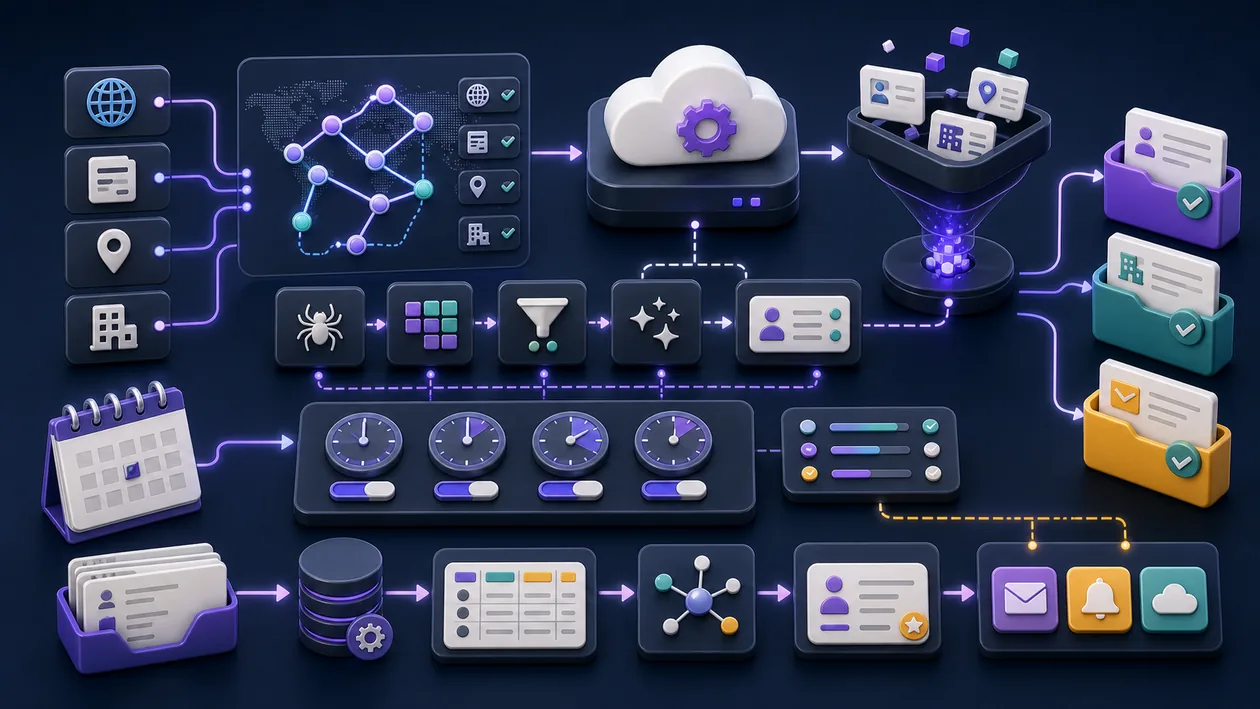
PhantomBuster
PhantomBuster automates web and social media actions, data extraction, and lead workflows through prebuilt cloud automations.

Playwright
Playwright is an open-source end-to-end testing framework for modern web applications.

Zoho Writer
A collaborative cloud word processor with document automation and AI-assisted writing features.


Aider
Terminal-first AI coding tool for repository-aware edits, refactoring, tests, and Git-based review with configurable model providers.

Aide
Short description coming soon.

Algolia
Algolia is a hosted search and discovery API for fast, typo-tolerant product search, app search, filtering, and relevance tuning.

Apache Hadoop (self-hosted)
Short description coming soon.
From the editorial desk.
QCon AI Boston points to a practical shift: production reliability comes from context, state, boundaries and evaluation, not from better prompts alone.
Slack did not present agentic testing as a replacement for CI. Its 200-plus-run experiment treats browser agents as an exploratory layer for brittle UI flows, with clear costs, boundaries and evidence requirements.
AI agents, search crawlers and training bots do not create the same kind of web traffic. This guide explains which signals are useful, where robots.txt stops and how publishers and agent teams can build a fair, resilient access path.